

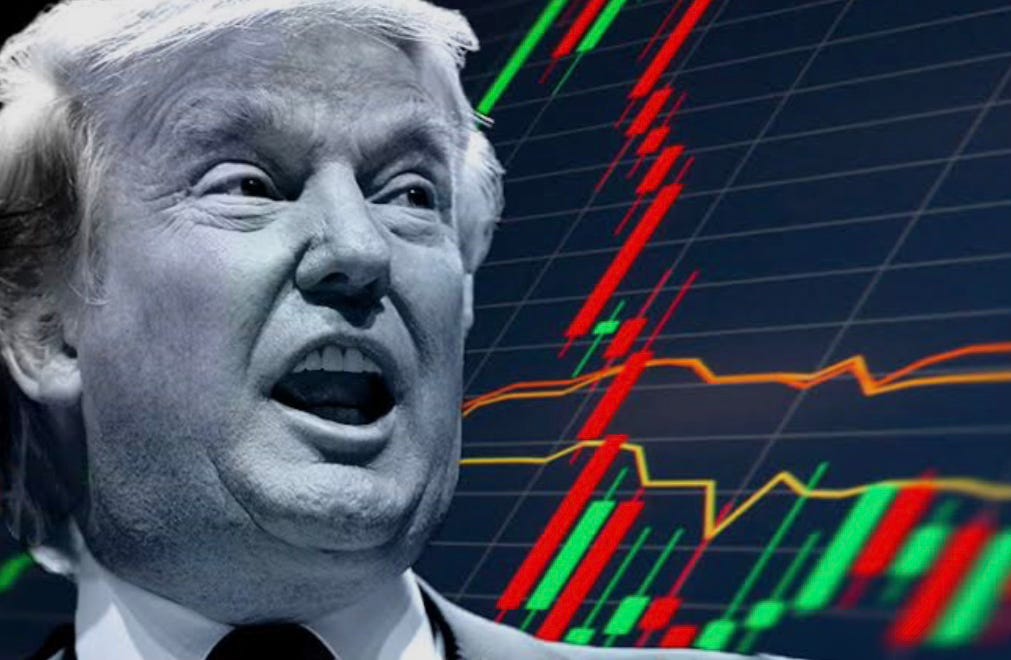
Before American financial markets opened on Monday, March 23, nearly a month into the U.S-Israeli war on Iran, President Donald Trump announced that the U.S. and Iran have had “very good and productive conversations regarding a complete and total resolution of our hostilities in the Middle East,” and therefore the U.S. would refrain from attacking Iranian power plants as he had threatened last week. Iranian state media portrayed that as the U.S. backing down in the face of Iran’s warnings, and speaker of Iran’s parliament Mohammad Bagher Qalibaf said no negotiations had taken place, claiming that Trump was lying “to manipulate the financial and oil markets and escape the quagmire in which the U.S. and Israel are trapped.”
All sides in this conflict have incentives to lie and spin—psychological warfare, signaling resolve, posturing for domestic audiences, shaping outsiders’ opinions, establishing negotiating positions, etc.—so no one should take either at their word. Outside observers can’t know if any talks really took place, and if so, what happened in them. Pakistan reportedly offered to mediate, and sent Iran a 15-point plan from the U.S. Iran has rejected that offer, according to state media, and it continues blocking the Strait of Hormuz, the choke point at the end of the Persian Gulf through which about 20% of the world’s oil and natural gas usually flows. Missiles are still flying, global energy shortages are worsening, and the U.S. is sending about 2,000 soldiers from the Army’s 82nd Airborne to the Middle East, adding to the 4,500 Marines already in route.
On the competing claims about progress or lack thereof, it looks like Qalibaf’s statement is more accurate, especially the part about Trump manipulating markets. Economic damage is accumulating, and fewer Americans supported the war at the start than any post-WWII U.S. conflict. Gas prices have risen about a dollar per gallon since before the war began at the end of February, creating political liabilities for the president as his party faces a challenging Congressional election this November.
It also looks like there’s been some massive insider trading. 15 minutes before Trump’s announcement, trading in oil and S&P futures spiked to an unusually high volume, with $580 million betting on an oil price decline alone. Then the market opened, oil plunged, stock indices rose, and someone made a fortune.
But is Qalibaf right about the second part, that the U.S. and Israel are trapped? Do America’s leaders want the fighting to stop more than Iran’s? If so, Iran would now be more in control of the war than the militarily superior countries that started it.
Trump could…
Read the full thing for free in Liberal Currents: https://www.liberalcurrents.com/what-if-iran-doesnt-want-the-war-to-end-yet/