

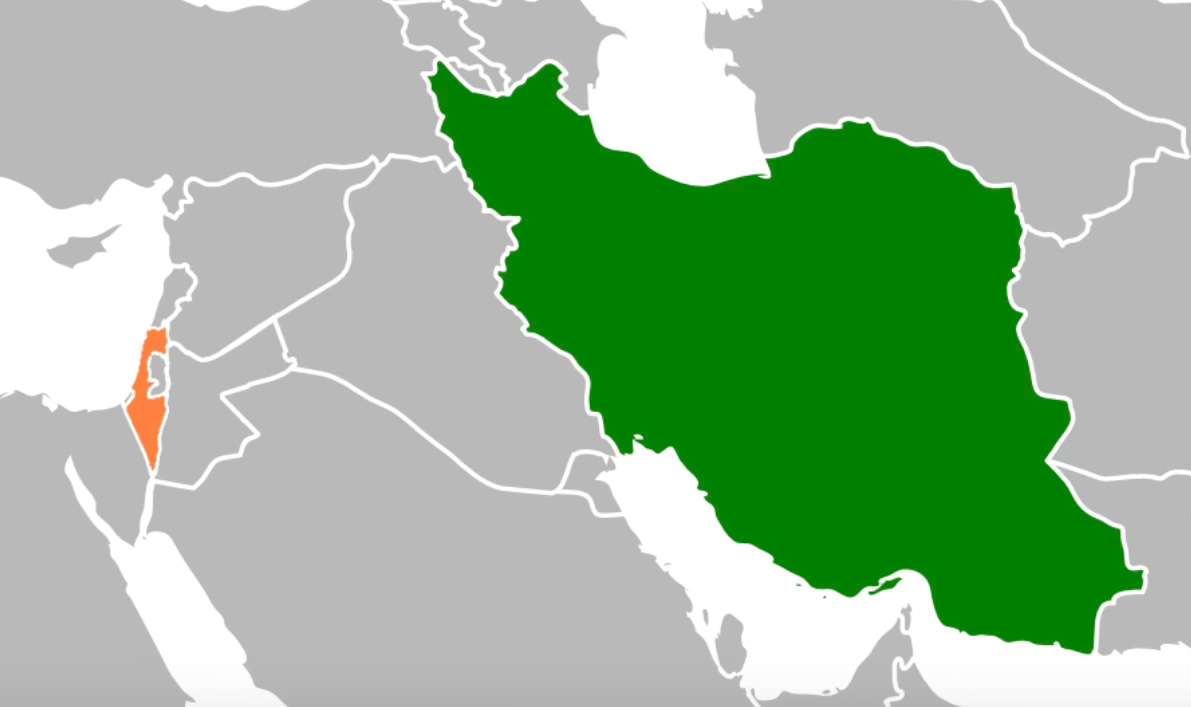
Israel and Iran have fought a shadow war for at least two decades, but on June 12, Israel took it public, escalating dramatically with direct attacks on numerous sites in Iran.
The shadow war took place primarily via Iranian material support for anti-Israel militant groups—Hezbollah in Lebanon, Hamas in Gaza, the Houthis in Yemen, etc.—and with targeted Israeli attacks on weapons shipments and occasionally personnel. Attacks against Israel came from Iranian proxies with varying degrees of independence, never Iran itself. Israeli strikes hit targets far from Iran, such as weapon shipments in Sudan in 2009, or military advisers in Syria in 2015, or stayed in the gray zone of plausibly deniable covert operations, most notably assassinations of nuclear scientists inside Iran in the early 2010s.
The first direct exchange between Israel and Iran didn’t happen until 2024, in connection with fighting in Gaza and Lebanon set off by the October 7, 2023 attack on Israel by Hamas (who reportedly did it on their own after failing to persuade Iran to join a larger, coordinated assault). But while Iran and Israel firing at each other was a significant escalation, it remained tightly limited, with two instances of tit-for-tat launches that caused relatively little damage. Israeli air defenses, with help from the U.S., U.K., France, Jordan, the U.A.E., and Saudi Arabia, shot down most of the projectiles Iran fired, and Israel used a stealthy weapon to destroy an Iranian radar station near a nuclear facility.
The official reason for Israel’s current attack is Iran’s nuclear program, with Israeli officials saying that Iran was about to produce multiple nuclear weapons. However, parsing Israeli justifications doesn’t indicate that they thought Iran would have deployable nukes within a month. Rather, they claim Iran has been “working to secretly develop all components needed for developing a nuclear weapon” and has enough enriched uranium to build bombs if they wanted to, or at least will soon.
Israeli Prime Minister Benjamin Netanyahu has lobbed variations of that accusation for many years, such as in a speech to the United Nations in 2012, where he claimed Iran’s nuclear program was about to pass a point of no return. Maybe the latest claims are exaggerated.
Then again, Israel didn’t launch an attack in 2012, nor in all the other years Netanyahu said Iran was about to have nuclear weapons, suggesting that the Israeli military and intelligence establishment saw something more this time. Or perhaps the nuclear concerns were unchanged, and this is a long-planned operation to weaken Iran’s capabilities after the second Iranian launch against Israel in 2024 got some missiles through air defenses.
Either way, Israel’s attack on Iran was considerably larger than a strike against Iran’s nuclear program. They hit over 100 targets, including radar and air defenses to facilitate the strikes, bombed Iranian military sites along with nuclear infrastructure, and assassinated senior officials. Some leading Iranian nuclear scientists are dead, but so are the three highest ranking Iranian generals.
That’s not shadow war. It’s just war.
Unprecedented
There are two previous examples of direct strikes against nuclear programs in anti-Israel Middle Eastern states: Iraq in 1981 and Syria in 2007. In both cases, the nuclear program was small, with the country’s first reactors under construction. And Israel bombed them by surprise, rather than threatening to attack for years. By contrast, Israel’s attack on Iran included numerous strikes, in multiple locations, hitting a variety of targets.
Iran’s nuclear program is a lot more advanced, with multiple functioning reactors, nuclear enrichment facilities, and a stockpile of enriched uranium. The Iranians learned from Israel’s earlier attacks, especially the 1981 strike on Iraq, and dispersed their efforts. Some of it is hard to reach, such as the Fordow enrichment facilities inside a mountain near Qom. The United States might be able to destroy all of that, but Israel can’t. At least not without an unprecedentedly aggressive nuclear strike that would constitute a historic atrocity, and prompt a global reaction that would likely leave Israel less secure.
That said, the strategic circumstances recently changed. When Israel limited its retaliation for Iran’s 2024 ballistic missile launch, that was before Israel severely weakened Iran’s strongest non-state ally Hezbollah with exploding pagers and walkie-talkies, along with a series of airstrikes, and before Iran’s only allied Middle Eastern government, Bashar al Assad’s Syria, fell to Iran-skeptical rebels.
And in 2024, Joe Biden was the American president. One of the Biden administration biggest, most underrated achievements is keeping the Gaza war from spiraling into regional interstate conflict, in part by pressuring Israel to carefully calibrate its response to Iran’s launch, and retaliating against Iraqi and Syrian militias that attacked American forces, but not against their Iranian sponsors. Leaders rarely get credit for things that don’t happen, especially when many are criticizing them for things that do.
American Errors and Weakness
We wouldn’t be here if not for Donald Trump. In 2018, during his first term as U.S. president, Trump had the U.S. renege on the JCPOA, commonly known as the Iran Nuclear Deal, letting Iran out of nuclear restrictions in exchange for nothing.
That carefully negotiated agreement—signed by the U.S., Iran, Russia, China, the U.K., France, Germany, and the European Union in 2015—removed most of Iran’s enriched uranium, and capped enrichment at the 3.67% level needed for power plants for at least 15 years, well shy of the 20% necessary for an explosion, let alone the 85% threshold the U.S. considers “weapons grade.” The International Atomic Energy Agency said Iran was honoring the agreement, and every JCPOA signatory’s intelligence community agreed, as did the U.S. military. Then-Secretary of Defense James Mattis testified to Congress that Iran was “fundamentally in compliance.”
Trump broke the deal anyway, reimposing sanctions and claiming a strategy of “maximum pressure” would yield better results. That was ignorant, since unilateral American sanctions imposed after the 1979 Islamic Revolution never got Iran to make concessions, only global sanctions that began in 2006 with every major economy participating did. Every other JCPOA participant opposed Trump’s move, and despite his cajoling, none imposed new sanctions. Because, again, the deal they negotiated was working, and he broke it without cause.
The main result of Trump ending JCPOA was Iran ramping up nuclear enrichment again. The Iranian government neither agreed to a “better deal,” nor collapsed under pressure as some Iran hawks fantasized.
From 2021 to 2024 under President Joe Biden, the U.S. tried to negotiate a new nuclear deal, but failed. That shouldn’t be surprising, since America broke the last agreement. U.S. media might cast individual presidents as the main character of an ongoing narrative, but to other countries, it’s all the United States. Even if Iran believed Biden would honor an agreement, they knew the U.S. could always be one election away from reneging again.
After becoming president for a second time in 2025, Trump tried diplomacy, pursuing a nuclear deal along the lines of the one he broke seven years ago. Maybe he thought that would work, and the Iranians would forget about the entire 2010s. Or maybe his main goal was lying to the American people, like when he absurdly declared “there is no longer a nuclear threat from North Korea” in 2018, after talks with North Korean leader Kim Jong-un achieved nothing (at least not for America; Trump gave North Korea a few things it wanted, such as suspension of U.S. - South Korea military exercises). Either way, Trump’s second term nuclear diplomacy with Iran went nowhere.
Embarrassingly, American negotiators were scheduled to meet with Iranian officials this Sunday. Israel bombed anyway.
And that’s not the only instance of American weakness under Trump that likely contributed to this escalation. In May, the U.S. ended a two-month bombing campaign against the Houthis in Yemen, launched to counter Houthi attacks on Red Sea shipping, which the Houthis claim is in response to Israel’s war in Gaza. After grandiose promises at the start, a scandalous leak of war plans via Signal, over $1 billion-worth of missiles that risked depleting America’s most advanced stockpiles, some downed Reaper drones, and two fighter jets falling into the sea, the U.S. quit, claiming the Houthis agreed to stop targeting American ships.
That sure looked like retreat under fire, as the goal had been ending attacks on all ships, including commercial vessels, not exclusively American ones, and the Houthis openly vowed to keep attacking Israel. They managed to get a missile through Israeli air defenses, hitting Ben Gurion airport, and Israel launched a series of missiles into Yemen in response.
That could have been a factor in Israel’s calculus in attacking Iran, as the Yemen example prompted worries that Trump would retreat and lie rather than help defend them.
It’s also possible the Israelis thought their attack on Iran could jam Trump, and drag the U.S. into a larger campaign against Iran’s nuclear program, or even a regime change war. Maybe Trump wouldn’t bomb when they asked, but would if they were under attack, or if Iran fired at American forces. U.S. Secretary of State Marco Rubio rushed to declare that America had nothing to do with Israel’s strikes, though some anonymous Israeli officials reportedly said America gave them a green light.
We shouldn’t overrate America’s role—this is about Israel and Iran more than any outsiders—but it’s worth noting that Israel didn’t do this while Biden, Barack Obama, or George W. Bush were president, despite making similar claims about the danger and imminence of a nuclear-armed Iran.
So What Now?
Israel says it will keep attacking Iran, at least for a few more days, perhaps weeks, trying to destroy more capabilities, including hardened targets.
Iran will retaliate in some fashion—no state would endure a direct attack like this and let it slide—though how remains to be seen. Iranian Supreme Leader Ali Khamenei vowed “severe punishment,” but he says stuff like that a lot, in part for domestic and allied audiences. Iran launched 100 drones against Israel as an opening salvo, but the Israelis shot them down, and the Iranians probably expected them to, based on the 2024 aerial exchange. Ballistic missiles could follow, but Iran would need to fire a lot of them to overwhelm Israel’s air defense—though fewer countries will help Israel this time—and Iran’s capabilities are unclear, especially after Israel’s big attack.
One question is whether they’ll target anyone other than Israel, in particular the United States. Iran recently threatened to strike U.S. bases if their nuclear facilities came under attack, but that was in the context of nuclear negotiations, before Israel’s strike, and also functioned as part of Iran’s long-running “Death to America” propaganda. Regionally dispersed U.S. forces, especially those based in Iraq, may offer less hardened and geographically closer targets than Israel, but attacking them adds additional risks. Unless the Iranians conclude that Israel’s strikes were effectively an attack by America, and feel compelled to retaliate against the U.S., lest they encourage more.
The most drastic option would be to forcibly close the Strait of Hormuz, a chokepoint at the edge of the Gulf through which about 20 percent of the world’s oil flows. America wouldn’t like that, but it would also damage the global economy, potentially generating widespread anger at Iran that they cannot afford.
And then there’s the militias. Iran’s regional strategy relies on arming and training groups in Iraq, Syria, Yemen, and Lebanon that could damage Israel and/or the United States, and be hard for those countries to eliminate.
Hamas is severely weakened, and was already doing everything it still can to fight Israel in Gaza. Hezbollah took big hits, but may be able to muster some response, such as cross-border rocket fire. The Houthis endured American and Israeli airstrikes while apparently maintaining most of their capabilities, much as they faced years of Saudi bombing in the 2010s and emerged stronger. Iraqi and Syrian groups aren’t as capable, but there are a number of them, based in different locations.
Iran has influence with these militias, but doesn’t really control them. As part of Iran’s retaliation, they could encourage allied groups to attack. Though it’s also possible some militants freelance, perhaps by hitting American forces even if Iran does not, in ways the U.S. blames Iran for anyway.
The only certain thing is that the Middle East is at one of its riskiest points this century, and could easily get worse.
The deal never should have never been resinded imo the inspector's agreement was an important part of the deal also having the eyes and ears on site & the areas around while having other international authorities in on the deal for added oversight, transparency & consequences. Now what all you have is bb & cos, mossads word on the situation or even djt & cos. Please as if that has always turned out to be the correct take on things more often than not causing more problems than not. The Afghanistan deal they brokered ended up with billions being siphoned & still unaccounted for while the rest of our troops were were lucky they got out when & how they did. That deal was set before Biden who never would have brokered such a deal either but had no other options than to get our guys out the way it was because the whole thing was booby trapped by prior to begin with. All those years for what, equipment & so much else left there. Again for chump trump & their own personal grift not our country & certainly not for what's in our greatest interests. All these years later here we are again weaker, less trustworthy, less alliances, alegences & more. Nobody seems to want to speak about all of our nuclear docs & intelligence they pilfored & sold off either which kinda sorta seems like an important thing also among so many other imo g d awful traitorous things they've done also. So yeah now on to the wag the dog B's, protests and a personal birthday parade. News flash if you really think he cares about the Army years your wrong on that too it's all about him and who he can pay to be there to worship him.
The Israeli attack dramatically reduces the Iranian Shia threat to the US and the Sunni Arab states. Iran is now heavily outclassed. Israel has total air supremacy and can strike any target in Iran at will. The Mullahs have lost half their military leadership and can’t trust that their ranks are not infiltrated by Mossad agents.
Of course, the leaders in Tehran will make angry threats and keep firing off drones that even they know won’t do much harm. And then after a week they’ll stop that. And then what? They they won’t make a peep. They’ll do what they can not to provoke Netanyahu or Trump from doing any more damage to their regime. They don’t want to go back into the ring for another round. They will throw in the towel and think about how to regroup and avoid having their regime overthrown.