

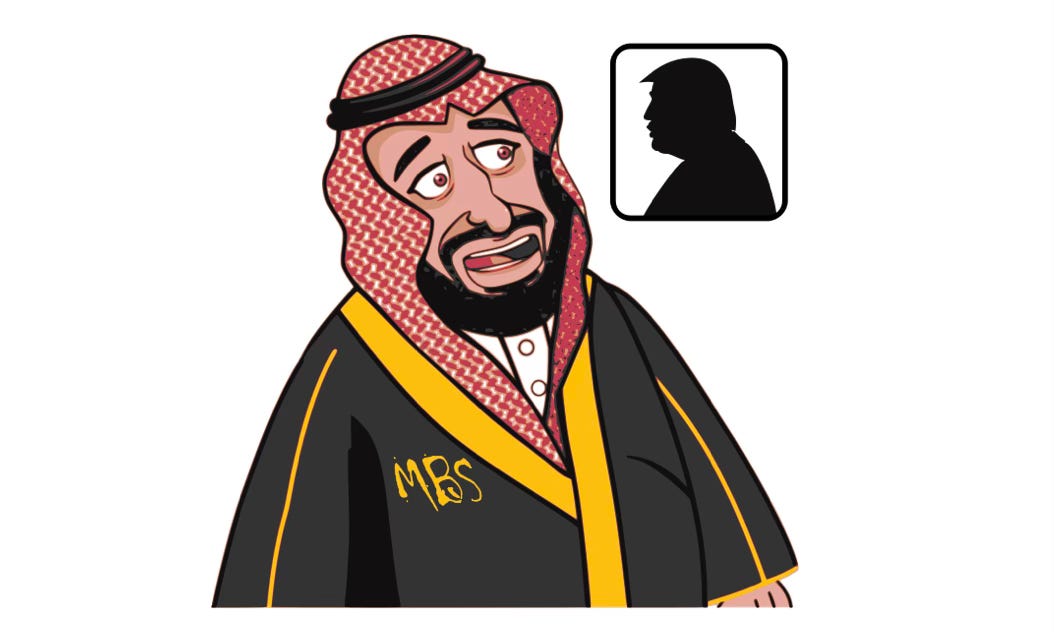
Saudi Arabia is in serious trouble. Their global influence primarily comes from their oil money—and a greater ability than anyone to increase or decrease daily oil production at will, thereby leading OPEC and shaping energy prices—but the regional Middle East war ignited by the U.S.-Israeli attack on Iran this spring put that in jeopardy. Today, Saudi tankers are blocked in the Persian Gulf and under threat in the Red Sea, and their biggest oil pipeline had to shut down after a drone attack. Their longtime security guarantor, the United States, is unable to stop it, and doesn’t seem especially interested in trying. This will likely get worse, and it’s hard to see how the Saudis find a way out.
Since World War II, and especially since the end of the Cold War, the Middle East has rested on a deal: U.S. military dominance provides relative stability, deterring and countering aggression, ensuring freedom of navigation, containing Iran, organizing air defense, and helping friendly governments stay in power. In exchange, Saudi Arabia and the smaller Gulf Arab states—Kuwait, Bahrain, Qatar, UAE—host American bases, cooperate on counterterrorism, and maintain the smooth flow of oil. The clearest example of this working was in 1990-91, when a U.S.-led coalition prevented Iraq from taking any Saudi oil fields and pushed Iraqi forces out of Kuwait.
Donald Trump’s failing Iran war broke that arrangement beyond repair. And Saudi Arabia doesn’t have a replacement.
The Saudi oil industry…
Read the rest in Foreign Policy here: https://foreignpolicy.com/2026/09/24/iran-trump-saudi-war-mbs-bad-bet/